

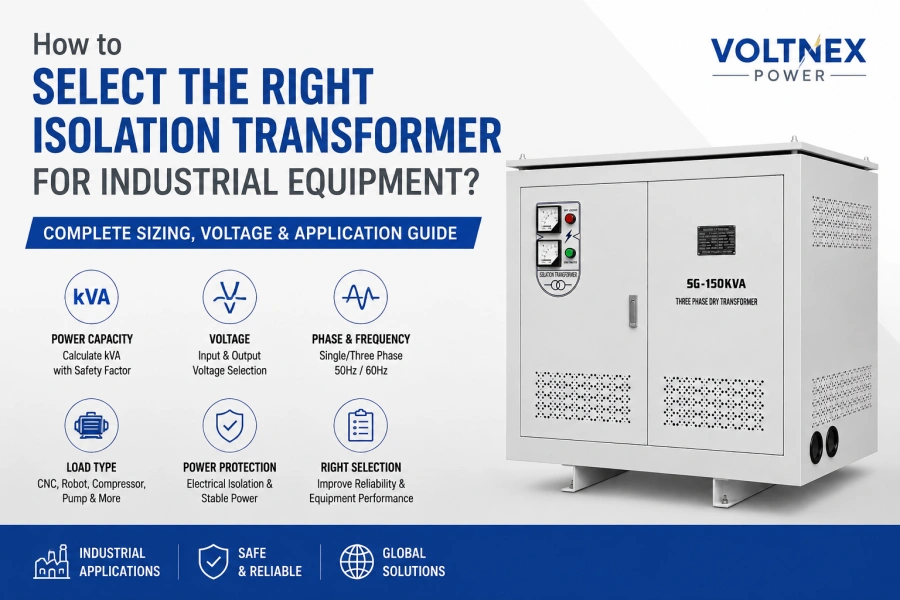
Introduction: Why Proper Isolation Transformer Selection Is Important
Selecting the correct isolation transformer is a critical step for ensuring stable, safe and reliable operation of industrial electrical equipment.
In modern factories, electrical systems are becoming more complex with the increasing use of:
- CNC machines
- Industrial robots
- Variable Frequency Drives (VFD)
- Compressors
- Pumps
- PLC automation systems
- Medical equipment
- Data center equipment
These devices often require clean, stable and isolated power because voltage fluctuations, electrical noise and grounding issues may cause:
- Equipment malfunction
- Control system errors
- Unexpected shutdowns
- Reduced equipment lifetime
- Production downtime
A correctly selected isolation transformer can provide:
✔ Electrical isolation
✔ Voltage conversion
✔ Power quality improvement
✔ EMI noise reduction
✔ Sensitive equipment protection
✔ Stable industrial operation
This guide explains how to select the right isolation transformer based on:
- Power capacity (kVA)
- Input voltage
- Output voltage
- Phase
- Frequency
- Load type
- Installation environment
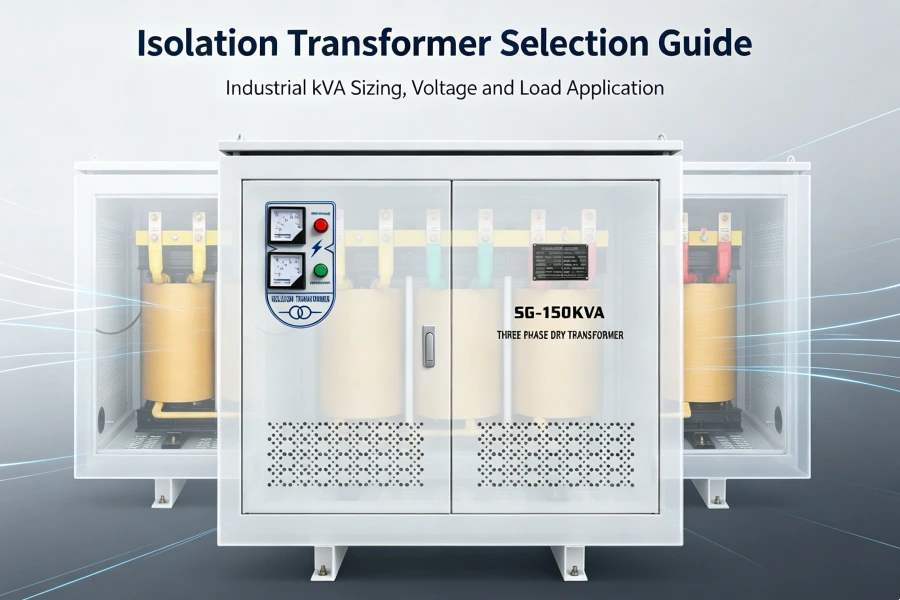
1. Understand Your Equipment Electrical Requirements Before Selecting a Transformer
Before purchasing an isolation transformer, the first step is understanding the electrical requirements of the connected equipment.
Every industrial machine has different power characteristics.
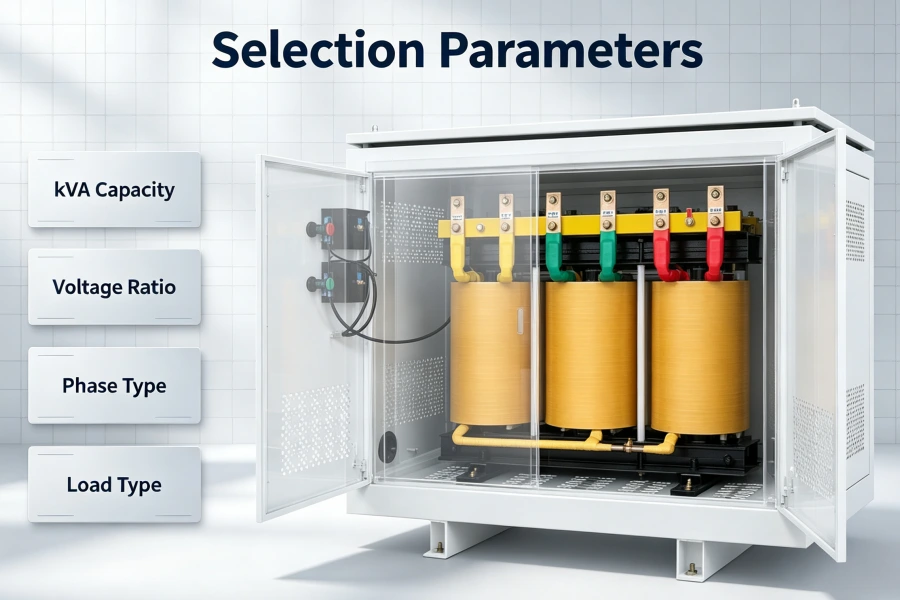
The main parameters include:
2. Step One: Select the Correct Transformer Power Capacity (kVA)
What Is Transformer kVA Rating?
Transformer capacity is measured in:
kVA (Kilovolt Ampere)
Unlike motors or equipment rated in kW, transformers are rated by apparent power because they handle both:
- Active power
- Reactive power
The transformer must be large enough to supply the connected load without overheating.
Transformer Capacity Calculation Formula
The basic calculation:
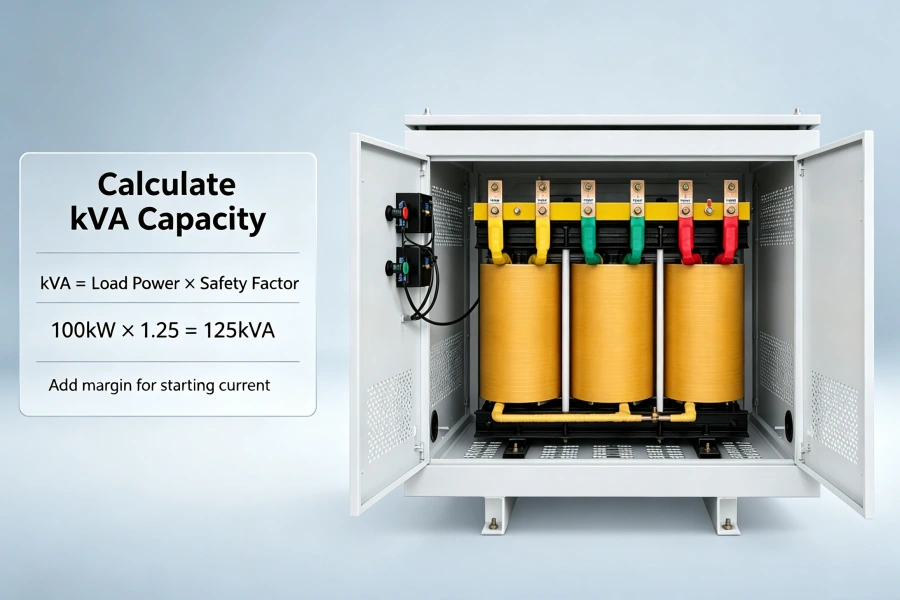
Transformer Capacity (kVA) = Load Power (kW) × Safety Factor
Example:
Industrial equipment power:
100kW
Recommended safety factor:
1.25
Calculation:
100kW × 1.25 = 125kVA
Recommended transformer:
Recommended Safety Factor Selection
Different applications require different margins.
3. Motor Loads Require Additional Transformer Capacity
Many industrial machines contain motors.
Examples:
- CNC spindle motors
- Air compressors
- Water pumps
- Fans
- Conveyor systems
Motors create:
- High startup current
- Voltage drop
- Mechanical load variation
A transformer selected only according to running power may become overloaded during startup.
Example: Compressor Application
Equipment:
75kW Compressor Motor
Motor starting factor:
1.5
Calculation:
75kW × 1.5 = 112.5kVA
Recommended transformer:
125kVA or 150kVA Isolation Transformer
4. Step Two: Confirm Input Voltage
The input voltage is the incoming factory electrical supply.
Common industrial voltages include:
North America
- 208V
- 240V
- 480V
- 600V
Europe
- 380V
- 400V
- 415V
South America
- 220V
- 380V
- 440V
Australia
- 400V
- 415V
Voltnex Power provides customized transformer voltage solutions for worldwide electrical standards.
5. Step Three: Select the Correct Output Voltage
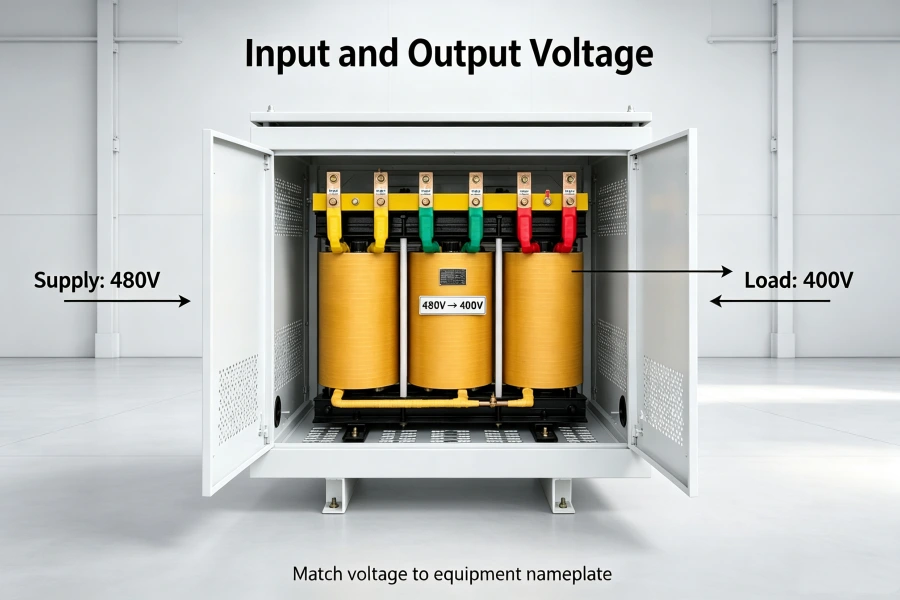
The output voltage must match the equipment nameplate requirements.
Example:
Factory Power:
480V
Machine Requirement:
400V
Solution:
480V → 400V Isolation Transformer
Common output voltages:
- 110V
- 120V
- 208V
- 220V
- 240V
- 380V
- 400V
- 415V
- 440V
- 480V
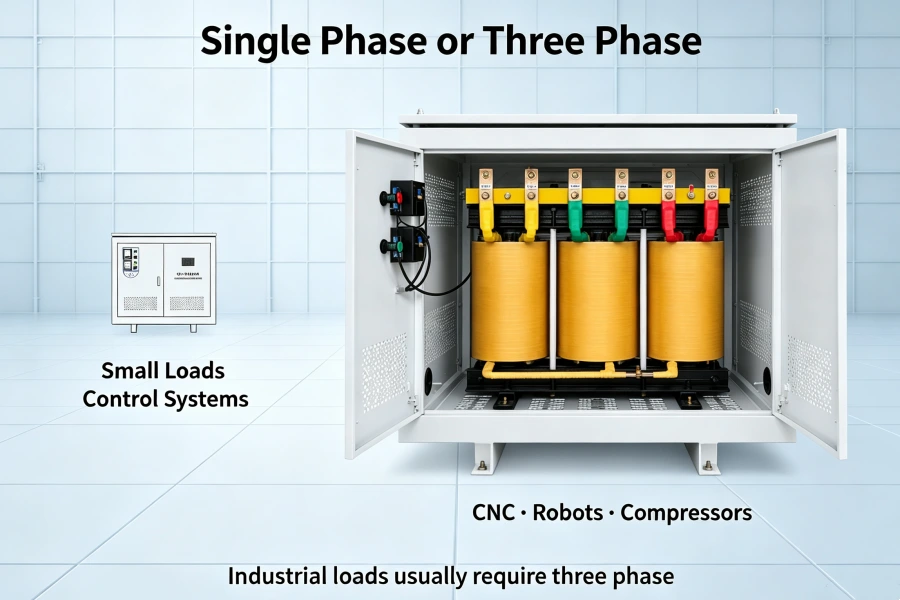
6. Step Four: Select Single Phase or Three Phase Isolation Transformer
Single Phase Isolation Transformer
Suitable for:
- Small machines
- Control systems
- Laboratory equipment
- Electronic devices
Typical power range:
1kVA – 20kVA
Applications:
- Control panels
- Testing equipment
- Small automation systems
Three Phase Isolation Transformer
Suitable for:
- Industrial machinery
- Motors
- Production lines
- Automation systems
Typical range:
15kVA – 3000kVA
Applications:
- CNC factories
- Robot systems
- Compressors
- Pumps
- HVAC systems
Learn More:Industrial Power Quality Problems and Solutions: Transformer, AVR, SVG and AHF
7. Step Five: Confirm Frequency Requirement
Industrial electrical systems commonly use:
50Hz
Used in:
- Europe
- Asia
- Africa
- Middle East
60Hz
Used in:
- USA
- Canada
- Mexico
- Parts of South America
A transformer should be designed according to the operating frequency.
Voltnex Power supports:
- 50Hz
- 60Hz
- Customized frequency requirements
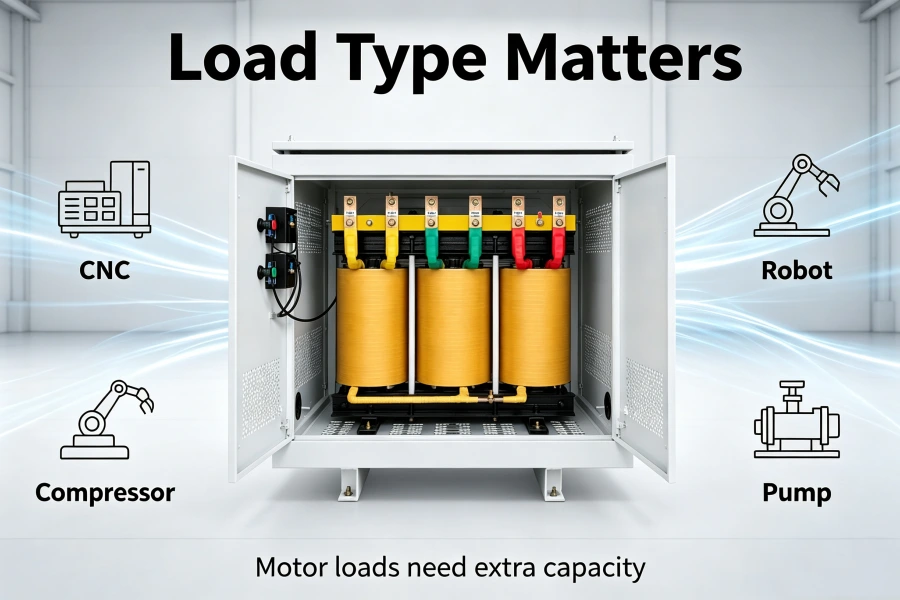
8. Step Six: Identify Load Type
Different equipment types have different transformer requirements.
CNC Machine Isolation Transformer Selection
CNC equipment requires:
- Stable voltage
- Low electrical noise
- Reliable control power
Typical applications:
- CNC machining centers
- Milling machines
- Laser cutters
Recommended features:
✔ Three phase design
✔ Copper winding
✔ Low-loss core
✔ EMI reduction capability
Robot Automation System Transformer Selection
Industrial robots include:
- Servo motors
- Controllers
- Sensors
- PLC systems
Power issues may cause:
- Communication errors
- Positioning problems
- Production interruption
Recommended transformer:
Three Phase Dry Type Isolation Transformer
Compressor Transformer Selection
Compressors have high starting current.
Examples:
- Air compressors
- Refrigeration compressors
- Industrial cooling systems
Important factors:
- Starting current
- Motor power
- Continuous operation
Recommended:
Higher safety factor transformer sizing.
Pump System Transformer Selection
Industrial pumps include:
- Water pumps
- Wastewater pumps
- Irrigation systems
Consider:
- Motor starting characteristics
- Operating hours
- Load fluctuation
Applications:
- Water treatment
- Manufacturing plants
- Agriculture systems
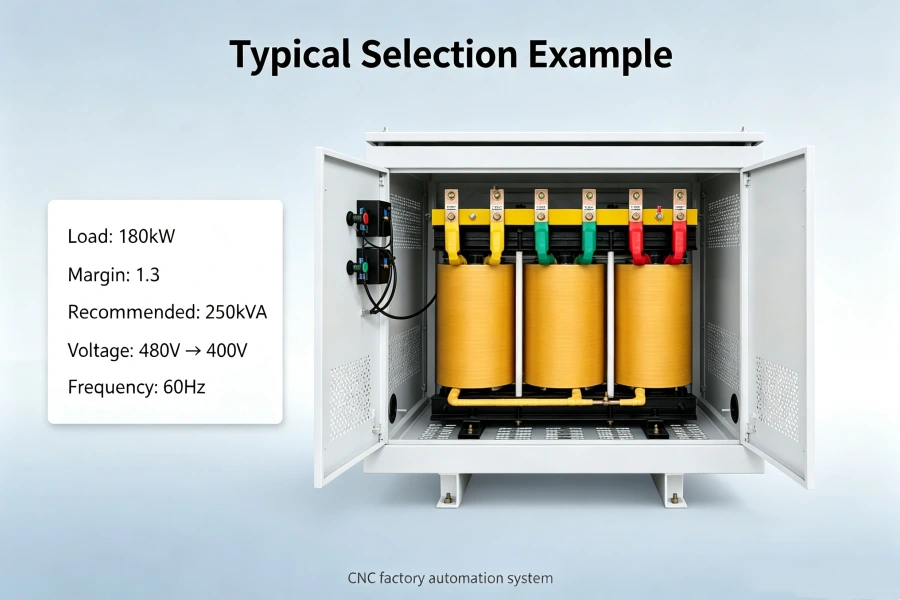
9. Dry Type Isolation Transformer Selection Example
Customer Requirement
Industrial factory:
Equipment:
- CNC machines
- Robot systems
- Compressor
Electrical supply:
480V / 60Hz
Equipment voltage:
400V
Total equipment load:
180kW
Calculation
Safety factor:
1.3
Formula:
180kW × 1.3 = 234kVA
Recommended transformer:
250kVA Three Phase Dry Type Isolation Transformer
Recommended Specification
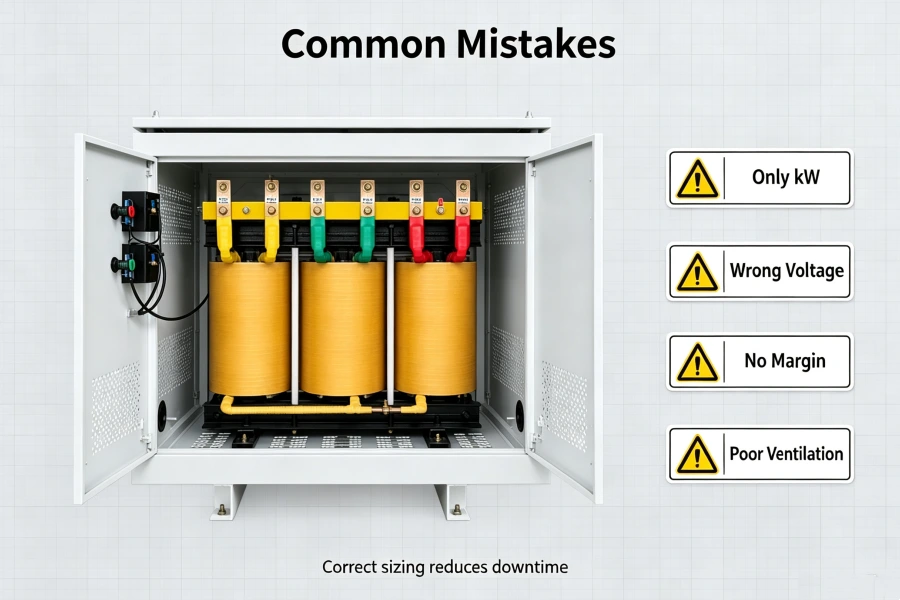
10. Common Mistakes When Selecting an Isolation Transformer
Mistake 1: Selecting Transformer Based Only on kW
Incorrect:
100kW equipment = 100kVA transformer
Why?
Because motors require startup capacity.
Mistake 2: Ignoring Voltage Compatibility
Incorrect voltage selection may cause:
- Equipment damage
- Reduced efficiency
- Abnormal operation
Mistake 3: Ignoring Installation Environment
Consider:
- Temperature
- Humidity
- Dust
- Ventilation
For industrial environments:
IP20/IP21/IP54 enclosure options may be required.
Mistake 4: Choosing Low Quality Windings
Copper winding advantages:
- Lower resistance
- Better efficiency
- Higher reliability
- Better thermal performance
Read More:What Is an Isolation Transformer? Working Principle, Benefits and Industrial Applications
11. Why Choose Voltnex Power Isolation Transformers?
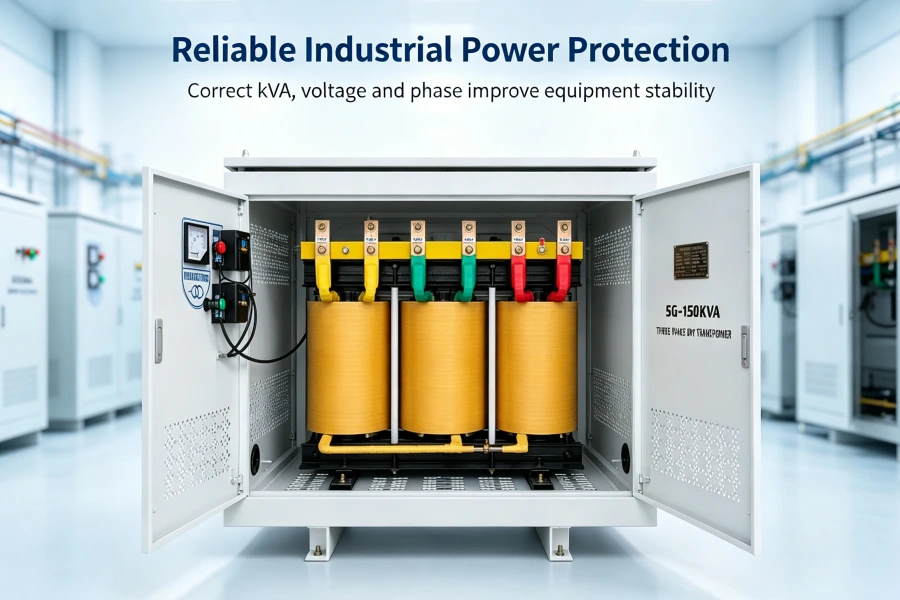
Voltnex Power is a professional China isolation transformer manufacturer and industrial power solution supplier.
We provide:
Customized Transformer Design
Including:
- Voltage ratio
- kVA capacity
- Phase configuration
- Frequency
- Enclosure design
- Protection level
Product Range
Voltnex Power supplies:
- Dry Type Isolation Transformers
- Three Phase Isolation Transformers
- Industrial Transformers
- VFD Transformers
- Voltage Stabilizers
- Power Quality Solutions
Technical Capability
Available:
Power:
1kVA – 3000kVA
Voltage:
110V – 600V AC
Frequency:
50Hz / 60Hz
Winding:
Copper / Aluminum
Cooling:
AN / AF
12. Global Industrial Applications
Voltnex Power transformers are used worldwide in:
Manufacturing
- CNC factories
- Production lines
- Automation equipment
Energy
- Solar systems
- Battery storage
Medical
- Hospitals
- Laboratories
Data Centers
- UPS systems
- Critical power systems
Industrial Facilities
- Compressors
- Pumps
- Motors
Learn More:Three Phase Isolation Transformer: Applications, Benefits and Industrial Guide
FAQ: Isolation Transformer Selection
Q1: How do I calculate the isolation transformer size?
Use:
Transformer Capacity = Load Power × Safety Factor
For industrial equipment, usually select 20%-50% additional capacity.
Q2: What kVA transformer do I need for a CNC machine?
It depends on:
- CNC power rating
- Motor size
- Starting current
Usually a safety margin is required.
Q3: Should I choose copper or aluminum winding?
Copper winding provides:
- Better conductivity
- Lower losses
- Higher reliability
Q4: Can isolation transformers support VFD systems?
Yes. Dry type isolation transformers are commonly used with VFD motor control applications.
Q5: What voltage options are available?
Voltnex Power supports:
110V, 120V, 208V, 220V, 240V, 380V, 400V, 415V, 440V, 480V, 575V and 600V.
Conclusion
Selecting the right isolation transformer requires careful consideration of:
- kVA capacity
- Voltage ratio
- Phase
- Frequency
- Load characteristics
- Installation environment
For industrial equipment such as:
- CNC machines
- Robotics systems
- Compressors
- Pumps
- Automation equipment
a correctly sized dry type isolation transformer can significantly improve:
✔ Electrical safety
✔ Equipment reliability
✔ Power quality
✔ Production stability
As a professional China dry type isolation transformer manufacturer, Voltnex Power provides customized OEM/ODM transformer solutions, factory direct pricing and global industrial power solutions for customers worldwide.