

























Modern factories depend on stable electrical power to keep machines, motors, automation systems, and production lines operating reliably. However, different electrical problems require different solutions.
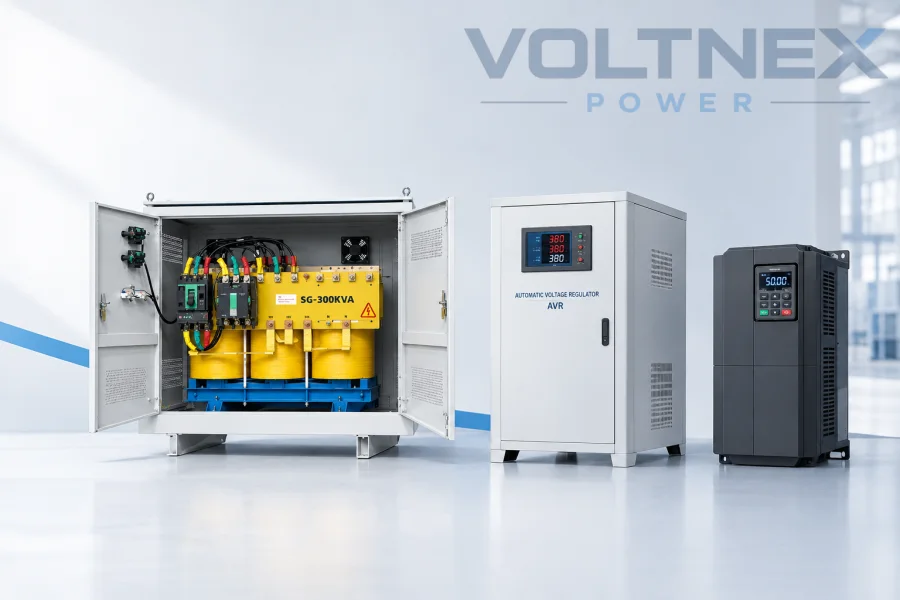
A Transformator is mainly used for voltage conversion and electrical isolation. An automatic voltage regulator (AVR) is designed to stabilize fluctuating voltage. A variable frequency drive (VFD) controls the speed and torque of AC motors.
For many industrial applications, these products can also work together as part of a complete power solution.
Understanding the Role of Each Industrial Power Equipment
Before selecting equipment, it is important to understand what each device is designed to solve.
1. Industrial Transformer: Voltage Conversion and Electrical Isolation
Industrial transformers are commonly used when equipment and utility power operate at different voltage levels.
For example, a factory may receive 480V three-phase power, while imported machinery requires 380V, 400V, 415V, 220V, or 208V.
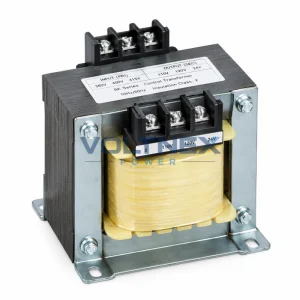
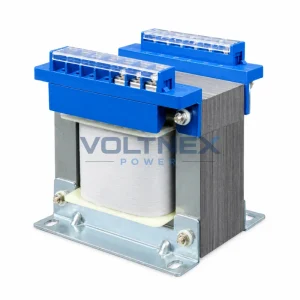
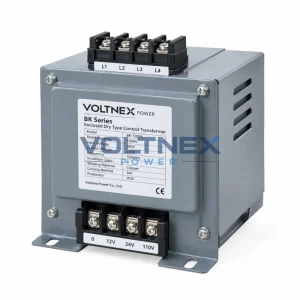
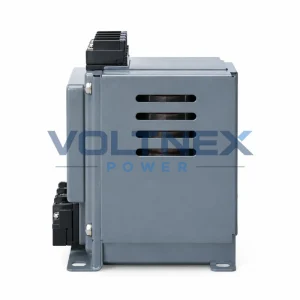
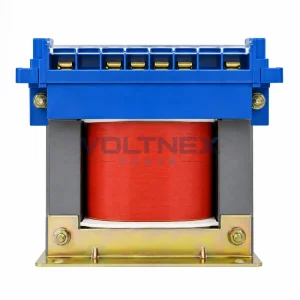
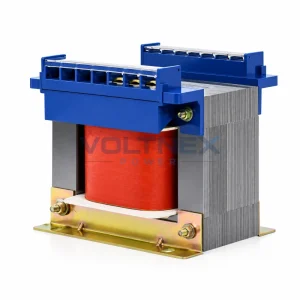
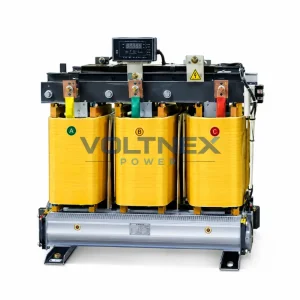
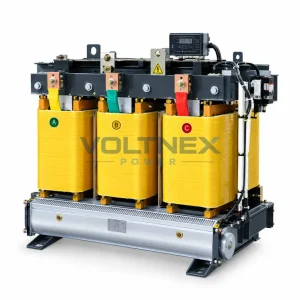
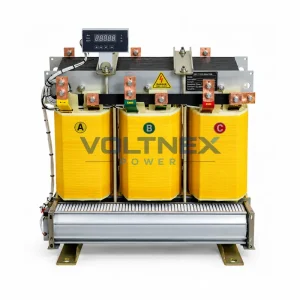
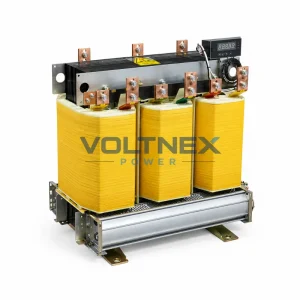
A Trockentransformator can convert the incoming voltage to the required level without using transformer oil.
An isolation transformer also provides galvanic isolation between the primary and secondary circuits. This can be useful for CNC machines, automation equipment, control systems, and other sensitive electrical loads.
Voltnex Power provides dry-type and isolation transformers with customized ratings from approximately 1 kVA bis 3500 kVA+, with voltage options from 100 V bis 690 V depending on the transformer series and application.
Typical applications include:
- CNC machinery
- Factory automation
- Industrial control systems
- Robotik
- Data centers
- Renewable energy systems
- General factory power distribution
2. AVR and Voltage Stabilizer: Maintaining Stable Voltage
A transformer can change voltage, but it does not automatically correct continuous voltage fluctuations.
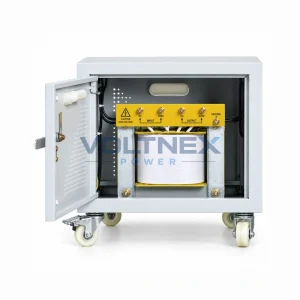
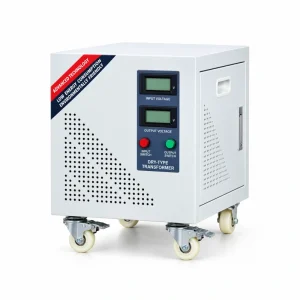
If the incoming utility voltage frequently changes, an Automatischer Spannungsregler (AVR) or industrial voltage stabilizer may be required.
For example, a factory may experience:
- Undervoltage during peak demand
- Overvoltage from unstable utility power
- Brownouts
- Voltage fluctuations caused by large industrial loads
- Voltage imbalance or sudden load changes
An AVR continuously monitors the input voltage and adjusts the output to maintain a more stable supply.
Depending on the design, industrial voltage stabilizers can use servo motor regulation, relay regulation, or static/solid-state technology.
Voltnex Power supplies single-phase and three-phase AVR solutions with capacities from small industrial systems to high-power applications. Voltage regulation accuracy can be customized according to the equipment and project requirements.
AVRs are commonly used for:
- CNC machines
- Production lines
- Industrial automation
- Medical equipment
- HVAC systems
- Telecommunications
- Commercial buildings
- Sensitive electrical equipment
3. VFD: Motor Speed and Process Control
A Frequenzumrichter (VFD) solves a different problem.
Instead of simply providing stable voltage, a VFD controls the operating speed and torque of an AC motor by adjusting its output frequency and voltage.
This is particularly useful when motor speed needs to change according to the production process.
Common VFD applications include:
- Water pumps
- Industrial fans
- Air compressors
- Conveyors
- HVAC systems
- Extruders
- Mining equipment
- Processing machinery
For example, a pump does not always need to operate at full speed. By using a VFD, the motor speed can be adjusted according to actual flow demand.
Voltnex Power offers industrial VFD solutions from approximately 0,75 kW bis 1000 kW, with voltage options covering common industrial systems from 208V to 690V.
Transformer vs AVR vs VFD: Which One Do You Need?
The simplest way to select the equipment is to start with the actual electrical problem.
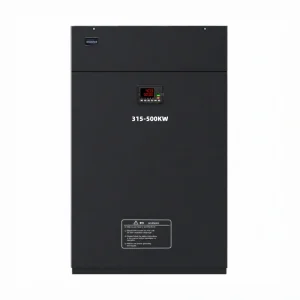
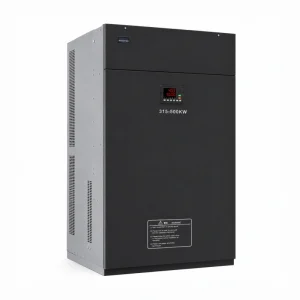
The important point is that these devices are not direct substitutes for each other.
A transformer primarily changes voltage and provides isolation.
An AVR stabilizes voltage.
A VFD controls motor speed and torque.
Choosing the correct equipment therefore starts with identifying the actual problem in the electrical system.
When Should You Combine Transformer, AVR and VFD?
Some industrial facilities have multiple electrical requirements at the same time.
Consider a factory receiving 480V three-phase utility power.
The production equipment may require 400V, the utility voltage may fluctuate during peak periods, and the factory may have large pumps and fans that require variable-speed control.
In this situation, a coordinated system could include:
Incoming 480V Power → Isolation Transformer → AVR Voltage Stabilizer → VFD → Motor
The transformer provides voltage conversion and electrical isolation.
The AVR helps maintain a stable voltage supply.
The VFD provides motor speed and torque control.
This type of configuration can be particularly useful for factories with sensitive automation equipment, variable-speed motors, and unstable utility power.
However, the final system should always be designed according to actual load characteristics, motor ratings, voltage requirements, installation conditions, and power quality measurements.
How to Select the Correct Industrial Power Equipment
Before requesting a quotation from a manufacturer, prepare several basic project parameters.
For Transformers
Provide:
- Erforderliche kVA-Leistung
- Primary voltage
- Secondary voltage
- Single-phase or three-phase
- 50 Hz oder 60 Hz
- Copper or aluminum winding
- Dry-type or enclosed design
- Required insulation and protection level
For example:
150kVA / 480V to 208Y/120V / 3 Phase / 60Hz / Dry Type
This information gives the manufacturer a clear starting point for technical evaluation.
For AVR Voltage Stabilizers
Important parameters include:
- Rated kVA
- Input voltage range
- Required output voltage
- Regulation accuracy
- Single or three phase
- Häufigkeit
- Lastart
- Required enclosure and protection
For unstable grids, the actual input voltage range should be measured whenever possible.
For VFDs
The most important information normally includes:
- Motor power in kW or HP
- Motor voltage
- Motor rated current
- Motor frequency
- Anwendung
- Required overload capacity
- V/f or vector control
- Communication requirements
Motor current should not be ignored simply because the VFD is selected according to kW or HP.
Choosing a China Manufacturer for Industrial Power Equipment
For international buyers, purchasing from a factory with multiple product capabilities can simplify technical communication and project coordination.
Voltnex Power ist ein China manufacturer of industrial power equipment, specializing in dry-type isolation transformers, industrial transformers, AVR voltage stabilizers, VFDs, VFD transformers, and customized electrical power solutions.
The company supports OEM and ODM manufacturing, custom voltage and capacity requirements, technical sizing, factory testing, wholesale orders, and international delivery.
Its products are designed for industrial automation, CNC machinery, robotics, manufacturing facilities, renewable energy systems, commercial buildings, and other industrial applications.
Final Considerations
Selecting industrial power equipment should begin with the electrical problem rather than the product name.
If you need to change voltage or provide electrical isolation, start with a Transformator.
If unstable utility voltage is affecting equipment, consider an AVR or voltage stabilizer.
If you need adjustable motor speed, soft starting, or process control, consider a VFD.
For more complex industrial systems, a coordinated combination of transformer + AVR + VFD may provide a more complete solution.
Voltnex Power provides factory-direct industrial power equipment and customized solutions for global customers.
If you are planning a factory automation, machinery, motor control, or power distribution project, send your input voltage, required output voltage, load capacity, motor power, frequency, and application to our engineering team for a customized solution.
Voltnex Power — China Manufacturer of Custom Industrial Power Equipment.