

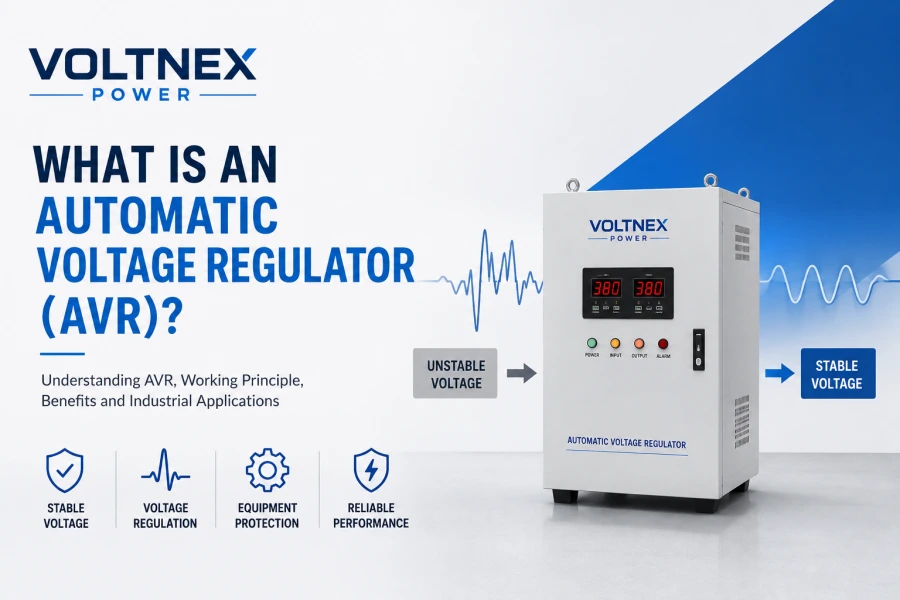
Automatic Voltage Regulator (AVR) is an electrical device designed to automatically maintain a stable output voltage when the input voltage fluctuates. It is widely used to protect industrial equipment, motors, CNC machines, automation systems and other electrical loads from undervoltage and overvoltage conditions.
Voltage instability is a common problem in industrial power systems. Changes in grid load, long distribution lines, large motor starting currents and unstable utility supplies can cause voltage to rise or fall.
For sensitive or continuously operating equipment, these fluctuations can lead to malfunction, reduced performance, overheating, unexpected shutdowns and premature component failure.
An Automatic Voltage Regulator (AVR) helps solve this problem by continuously monitoring the input voltage and automatically adjusting the output to keep the supplied voltage within the required range.
What Is an Automatic Voltage Regulator?
An Automatic Voltage Regulator, commonly called an AVR, is a voltage regulation device that automatically corrects variations in AC input voltage and provides a more stable output voltage to connected equipment.
In simple terms:
Unstable Input Voltage → AVR → Stable Output Voltage → Electrical Equipment
When the input voltage is too low, the AVR increases or boosts the voltage.
When the input voltage is too high, the AVR reduces or bucks/trims the voltage.
This automatic correction allows connected equipment to operate closer to its designed voltage range. Voltage regulation systems commonly use boost and buck correction to compensate for abnormal input voltage.
How Does an AVR Work?
The basic working principle of an automatic voltage regulator is relatively straightforward.
1. Voltage Detection
The AVR continuously monitors the incoming AC voltage.
2. Voltage Comparison
The control system compares the measured voltage with the preset output voltage.
3. Automatic Correction
If the input voltage falls below the required level, the AVR increases the voltage.
If the input voltage rises above the required level, the AVR reduces the voltage.
4. Stable Output
The corrected voltage is supplied to the connected load.
The entire process occurs automatically without requiring the operator to manually adjust the voltage.
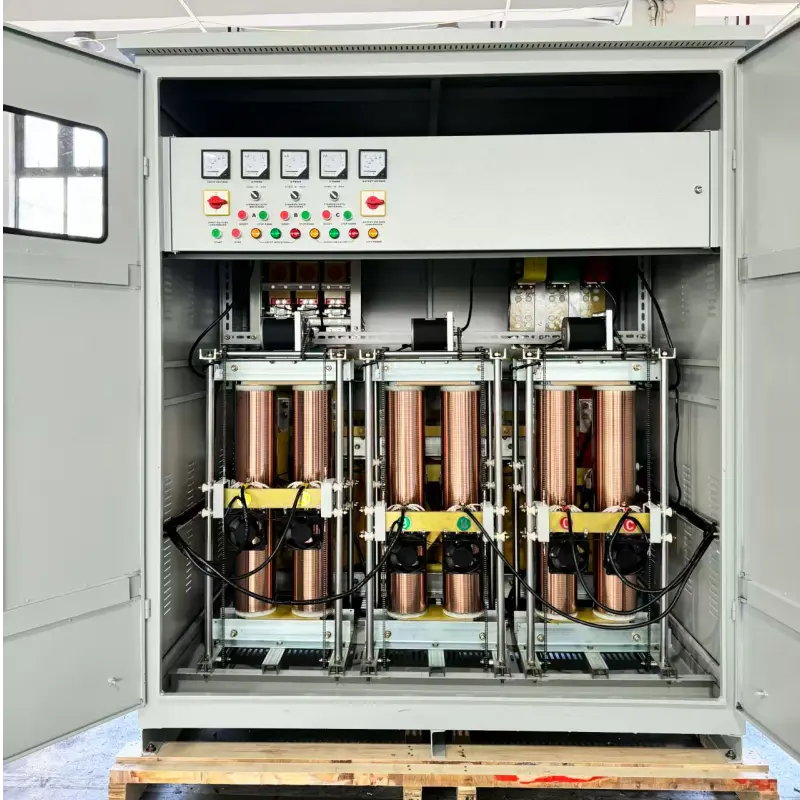
For larger power distribution voltage regulators, the system can use an autotransformer, tap changer and automatic control system. The controller senses voltage changes and commands the tap changer to change the transformer ratio.
Why Is an AVR Important for Industrial Equipment?
Industrial equipment is often designed to operate within a specific voltage range.
If voltage remains too low or too high, equipment performance can be affected.
Common problems caused by unstable voltage include:
- Motor overheating
- Reduced motor performance
- Equipment shutdown
- Control system errors
- CNC machine malfunction
- PLC and automation problems
- Shortened electronic component life
- Production interruptions
- Increased maintenance requirements
Voltage regulation can therefore be an important part of an industrial power protection strategy. Poorly regulated voltage can affect motors, electronics and other electrical equipment.
Common Applications of Automatic Voltage Regulators
AVRs are used in many industrial and commercial environments where voltage stability is important.
Manufacturing Facilities
Production lines may contain motors, PLCs, CNC machines, robotics and other electrical equipment that require stable power.
CNC Machines
CNC equipment can be sensitive to voltage variations. An AVR can help provide a more stable supply voltage for machine control systems and associated electronics.
Industrial Automation
Automation systems often combine PLCs, sensors, controllers, drives and communication equipment. Stable voltage can help improve operational reliability.
Motors and Motor Control Systems
Large motors can create voltage disturbances during starting and changing load conditions. Voltage regulation can help maintain suitable supply conditions.
Data Centers and IT Equipment
Sensitive electronic systems require controlled electrical power. AVR functions are also commonly incorporated into UPS and power-conditioning systems.
Commercial Buildings
Commercial facilities can use voltage regulation where unstable utility power affects lighting, HVAC, control systems or other electrical loads.
AVR vs. Voltage Stabilizer: Are They the Same?
The terms Automatic Voltage Regulator (AVR) and Automatic Voltage Stabilizer are often used interchangeably in the industrial power equipment market.
In general, both are intended to automatically correct input voltage fluctuations and provide a more stable output.
However, the actual technology can differ.
Depending on the design, an industrial voltage stabilizer may use:
- Servo motor control
- Buck/boost transformers
- Tap-changing transformers
- Electronic switching
- Static voltage regulation
Therefore, when selecting equipment, it is more important to evaluate the actual voltage regulation technology, input range, output accuracy, capacity and application requirements rather than relying only on the product name.
What Is the Difference Between an AVR and a UPS?
An AVR and a UPS have different primary functions.
| Feature | AVR | UPS |
|---|---|---|
| Voltage regulation | Yes | Yes, depending on topology |
| Battery backup | No | Yes |
| Voltage fluctuation correction | Yes | Yes |
| Power outage protection | No | Yes |
| Typical application | Voltage stabilization | Backup power + power protection |
An AVR primarily focuses on voltage regulation.
A UPS provides power continuity through energy storage and can also provide voltage regulation. For example, line-interactive UPS systems use AVR to correct abnormal input voltage without immediately switching to battery power.
How to Select the Right Automatic Voltage Regulator
Choosing an AVR should be based on the actual electrical application.
Important parameters include:
1. Rated Capacity
Determine the total load power and select an AVR with sufficient capacity.
For industrial applications, the starting current and load characteristics should also be considered rather than looking only at the nominal running power.
2. Input Voltage Range
The AVR must be capable of handling the actual voltage fluctuations at the installation site.
For example:
Input: 380V ±15%
and
Input: 400V ±20%
represent very different operating requirements.
3. Output Voltage
The required output voltage should match the equipment.
Common industrial configurations include:
220V, 380V, 400V, 415V, 440V, 480V and 600V.
4. Single Phase or Three Phase
The AVR should match the electrical system and connected load.
Three-phase industrial equipment normally requires a suitable three-phase voltage regulation solution.
5. Load Type
Consider whether the load consists mainly of:
- Motors
- CNC machines
- VFDs
- Transformers
- Automation equipment
- Computers and electronics
- Production machinery
Different loads may require different regulation characteristics and capacity margins.
6. Installation Environment
Temperature, humidity, ventilation, dust and enclosure requirements should also be considered when selecting an industrial AVR.
Does an AVR Save Energy?
An AVR’s primary purpose is voltage regulation, not energy generation.
However, maintaining appropriate voltage conditions can help electrical equipment operate closer to its intended operating range. The actual energy-saving effect depends heavily on the equipment, load profile and voltage conditions.
Therefore, an AVR should primarily be selected to solve voltage stability and equipment reliability problems, rather than simply as an energy-saving device.
Industrial AVR Solutions from Voltnex Power
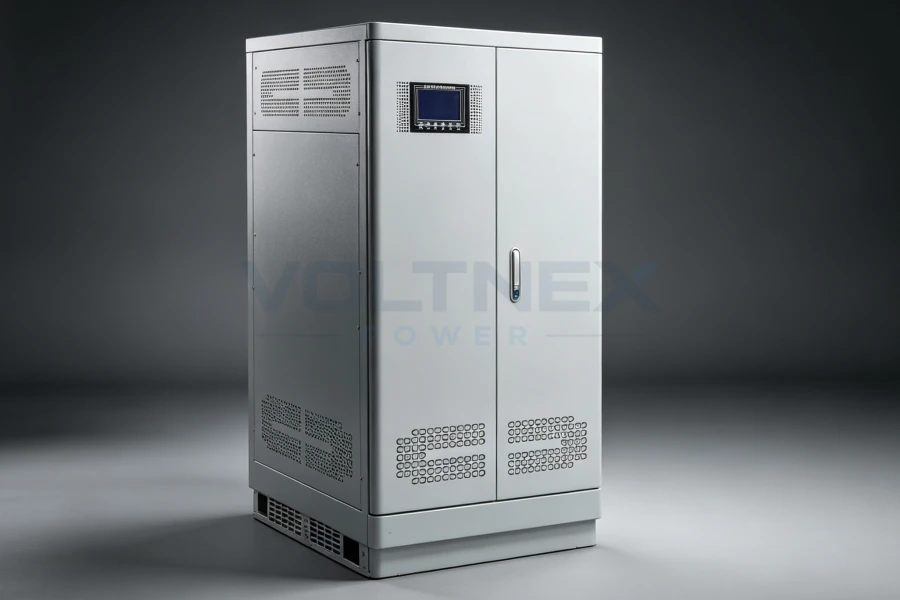
Voltnex Power provides Automatic Voltage Regulators (AVR) and industrial voltage stabilization solutions for applications where unstable voltage can affect electrical equipment and production processes.
Our solutions can be configured according to requirements such as:
- Single-phase or three-phase systems
- Input voltage range
- Output voltage
- Rated kVA capacity
- 50Hz or 60Hz frequency
- Industrial enclosure requirements
- Protection functions
- Customized electrical configurations
AVR solutions can be applied to manufacturing facilities, CNC machinery, industrial automation, motors, production lines, commercial buildings and other applications requiring stable AC power.
For customized requirements, Voltnex Power also provides OEM & ODM manufacturing and engineering support.
Conclusion
An Automatic Voltage Regulator (AVR) is designed to automatically correct input voltage fluctuations and provide a more stable voltage supply for connected electrical equipment.
For industrial applications, the right AVR can help address problems associated with undervoltage, overvoltage and unstable power conditions.
When selecting an AVR, always consider:
Capacity + Input Voltage Range + Output Voltage + Phase + Load Type + Application Environment
The correct solution should be based on the actual electrical conditions and equipment requirements.
Stable power starts with the right voltage regulation solution.