


























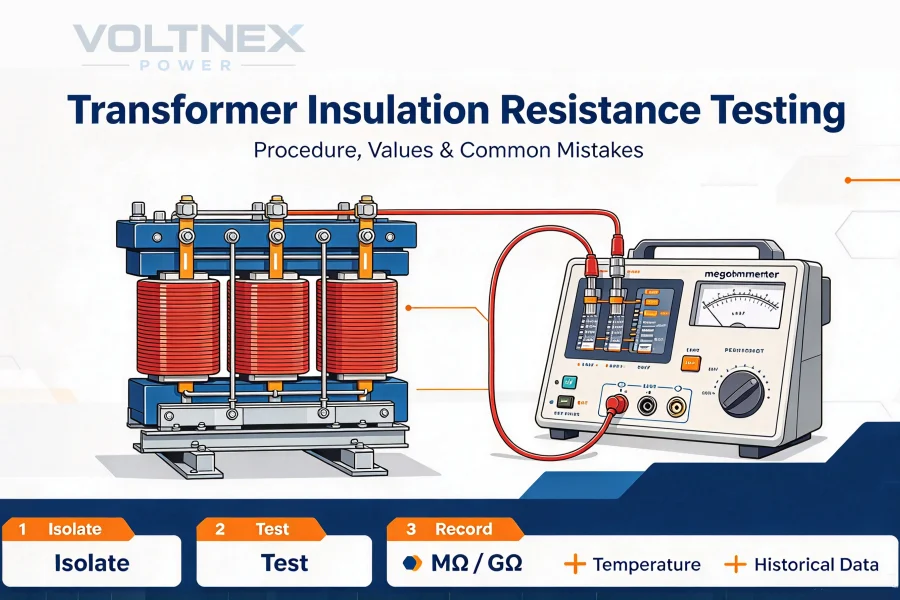
Transformer insulation resistance testing is an essential maintenance procedure for evaluating the condition of electrical insulation between windings and between windings and ground. It helps identify moisture, contamination, insulation deterioration, and other potential problems before they lead to electrical failures.
For industrial facilities, power distribution systems, and manufacturing plants, regular transformer insulation testing can reduce unexpected downtime and improve equipment reliability. This guide explains how to perform a transformer megger test, interpret insulation resistance values, and avoid common testing mistakes.
1. What Is Transformer Insulation Resistance Testing?
Transformer insulation resistance testing measures the resistance of insulating materials using a megohmmeter, commonly called a megger. The instrument applies a specified DC test voltage and measures the resulting insulation resistance, usually expressed in megohms (MΩ) or gigohms (GΩ).
The test typically evaluates insulation between:
-
High-voltage and low-voltage windings
-
High-voltage winding and ground
-
Low-voltage winding and ground
For dry-type transformers, insulation resistance testing is particularly useful for identifying the effects of moisture, dust, conductive contamination, and aging on winding insulation.
However, an insulation resistance test does not confirm every aspect of transformer insulation integrity. It should be combined with visual inspection, electrical testing, and other maintenance procedures when appropriate.
2. How to Perform a Transformer Megger Test
Follow the transformer manufacturer’s instructions and applicable electrical safety procedures before testing.
Step 1: Isolate the Transformer
Disconnect the transformer from all power sources and apply appropriate lockout/tagout procedures. Verify that the equipment is de-energized, and discharge stored electrical energy before connecting test instruments.
Disconnect sensitive electronic devices and other components that could be damaged by the test voltage, following the manufacturer’s instructions.
Step 2: Inspect the Transformer
Check the windings, terminals, insulation surfaces, and enclosure for visible damage, moisture, dust, or signs of overheating.
For dry-type transformers, inspect the ventilation passages and winding surfaces. Remove contamination using an approved cleaning method if necessary, and allow the equipment to dry completely before testing.
Step 3: Select the Megger Test Voltage
Choose an appropriate DC test voltage based on the transformer’s rated voltage, insulation system, manufacturer recommendations, and applicable testing standards.
Do not automatically apply the highest available test voltage. Excessive test voltage may damage unsuitable insulation systems or connected components.
Step 4: Measure Insulation Resistance
Connect the megohmmeter according to the approved test procedure.
Typical measurements include:
-
High-voltage winding to ground
-
Low-voltage winding to ground
-
High-voltage winding to low-voltage winding
Record the applied test voltage, measurement duration, ambient temperature, and measured resistance. A common measurement interval is one minute, but the required duration depends on the applicable procedure.
Step 5: Discharge and Record Results
After each measurement, allow the instrument to discharge the tested circuit and follow the manufacturer’s discharge and grounding instructions. Transformer windings can retain electrical charge after testing.
Record the results for future comparison. Consistent historical records are often more useful for identifying insulation deterioration than a single measurement.
Read More:Can Transformers Operate in Parallel? Requirements, Risks & Load Sharing
3. What Is a Good Transformer Insulation Resistance Value?
There is no single insulation resistance value that is suitable for every transformer. Acceptable readings depend on rated voltage, transformer design, insulation materials, temperature, moisture conditions, and the applicable acceptance criteria.
The following table illustrates the general interpretation of test results.
| Test Result | Possible Interpretation |
|---|---|
| High and stable resistance | Generally indicates favorable insulation condition |
| Lower than previous readings | May indicate moisture, contamination, or insulation deterioration |
| Rapidly decreasing resistance | May indicate changing insulation conditions or a test setup issue |
| Very low or unstable resistance | Requires investigation before the transformer is returned to service |
Important: These descriptions are general guidance, not universal pass/fail limits. Use the manufacturer’s specified limits and applicable standards to determine whether a transformer is acceptable for service.
Temperature also affects insulation resistance. A warmer winding may produce a lower reading than the same winding at a cooler temperature. For meaningful comparisons, record the temperature and use an appropriate temperature-correction method when required.
For a newly manufactured transformer, follow the manufacturer’s factory test requirements and the project specifications. For an existing transformer, compare the readings with previous results obtained under comparable conditions.
4. What Factors Affect Insulation Resistance?
Several factors can influence transformer megger test results.
Moisture: Humidity, condensation, and water exposure can reduce insulation resistance, especially in dry-type transformers installed in damp environments.
Dust and contamination: Conductive particles, oil residue, and accumulated dirt may create leakage paths across insulation surfaces.
Temperature: Insulation resistance changes with temperature. Measurements taken at different temperatures may not be directly comparable.
Insulation aging: Long-term thermal stress, electrical stress, and environmental exposure can gradually deteriorate insulating materials.
Test duration and connections: Different measurement durations, poor electrical connections, unsuitable test leads, and inconsistent test procedures can affect the results.
For reliable evaluation, keep testing conditions as consistent as possible and investigate unexpected changes rather than relying on one reading alone.
5. Common Transformer Insulation Testing Mistakes
Avoid these common errors when performing a transformer insulation resistance test:
-
Testing energized equipment: Always isolate the transformer and verify that it is de-energized before testing.
-
Using an unsuitable test voltage: Follow the manufacturer’s instructions and applicable testing requirements.
-
Ignoring temperature differences: Record temperature to support meaningful comparisons.
-
Failing to disconnect sensitive components: Ensure connected electronics and accessories are protected according to their specifications.
-
Skipping discharge procedures: Properly discharge the windings after testing to prevent electric shock.
-
Relying on one reading: Compare results with historical data and investigate abnormal changes.
-
Treating the megger test as a complete diagnosis: Insulation resistance testing does not replace other electrical and mechanical inspections.
These precautions are important for both routine maintenance and commissioning of new industrial transformers.
Learn More:Transformer Inrush Current Explained: Causes, Calculation & Protection
6. When Should You Test Transformer Insulation Resistance?
Insulation resistance testing may be appropriate during initial commissioning, scheduled preventive maintenance, after prolonged storage, following exposure to moisture, or after certain repairs.
The testing frequency should reflect the transformer’s operating environment, criticality, condition, and maintenance plan. Transformers operating in humid, dusty, or demanding industrial environments may require closer monitoring.
For dry-type isolation transformers and industrial control transformers, regular inspection and consistent test records can help maintenance teams identify potential problems before they cause costly interruptions.
7. Choosing a Reliable Industrial Transformer
Insulation performance depends on more than the test result. Transformer design, insulation materials, manufacturing quality, cooling conditions, and the intended operating environment all contribute to long-term reliability.
When selecting a dry-type transformer or industrial isolation transformer, consider the required primary and secondary voltages, rated capacity, frequency, insulation class, enclosure protection, installation conditions, and applicable standards.
Voltnex Power supplies industrial transformers and custom dry-type transformador de isolamento solutions for manufacturing facilities, commercial buildings, machinery, and power distribution applications. Customized voltage ratings, capacities, and configurations can be evaluated according to project requirements.
Need a transformer for your industrial application? Contact our team at inquiry@voltnexpower.com with your voltage requirements, kVA rating, application, and destination. We can help you evaluate a suitable transformer configuration for your project.
Frequently Asked Questions
What instrument is used for transformer insulation resistance testing?
A megohmmeter, commonly called a megger, is used to measure insulation resistance between transformer windings and between windings and ground.
How often should transformer insulation resistance be tested?
Testing frequency depends on the manufacturer’s recommendations, operating conditions, maintenance strategy, and applicable standards. Additional testing may be appropriate after repairs, prolonged storage, or moisture exposure.
Can a transformer pass a megger test and still have insulation problems?
Yes. An acceptable insulation resistance reading does not rule out every insulation defect. Other diagnostic tests and inspections may be necessary to assess the transformer’s overall condition.
Does a low insulation resistance reading always mean the transformer must be replaced?
No. Moisture, contamination, temperature, and testing errors can affect the reading. Investigate the cause, repeat the test under controlled conditions when appropriate, and consult qualified personnel before deciding whether repair or replacement is necessary.