

Voltage converters and transformers are both used to change voltage, but they work in different ways and are designed for different applications. Understanding the difference helps you choose the right equipment for industrial machines, electrical systems and power conversion projects. The Way It Works Transformer A transformer is an electrical device that changes AC voltage […]
Archivio Autore: Voltnex Power

A 3 phase to single phase transformer is used when a facility has three-phase electrical power but a machine, control system, or other electrical load requires single-phase power. This type of transformer is widely used for CNC machines, machine tools, industrial automation, manufacturing equipment, control cabinets, laboratory systems, telecom equipment, and commercial power systems. Common […]
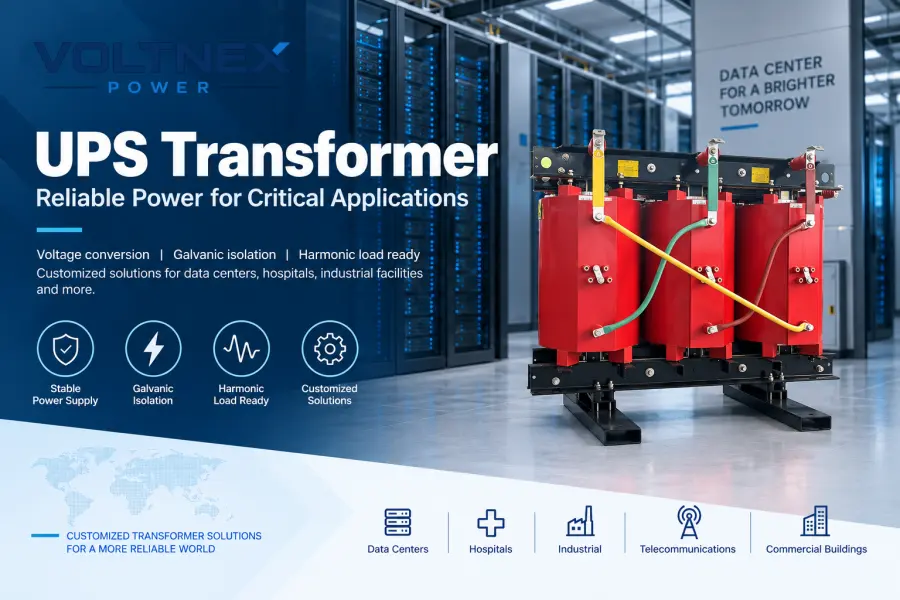
A UPS transformer is a specially designed transformer used with an Uninterruptible Power Supply (UPS) system to provide voltage conversion, electrical isolation, grounding configuration, and reliable power distribution for critical electrical loads. UPS transformers are commonly installed in data centers, hospitals, telecommunications facilities, industrial plants, control systems, financial facilities, laboratories, transportation infrastructure, and other mission-critical […]

A step down power transformer is an electrical transformer designed to reduce a higher input voltage to a lower output voltage required by industrial equipment, machinery, electrical systems, and power distribution networks. In modern industrial facilities, the available utility voltage does not always match the voltage required by production equipment. A step down transformer provides […]
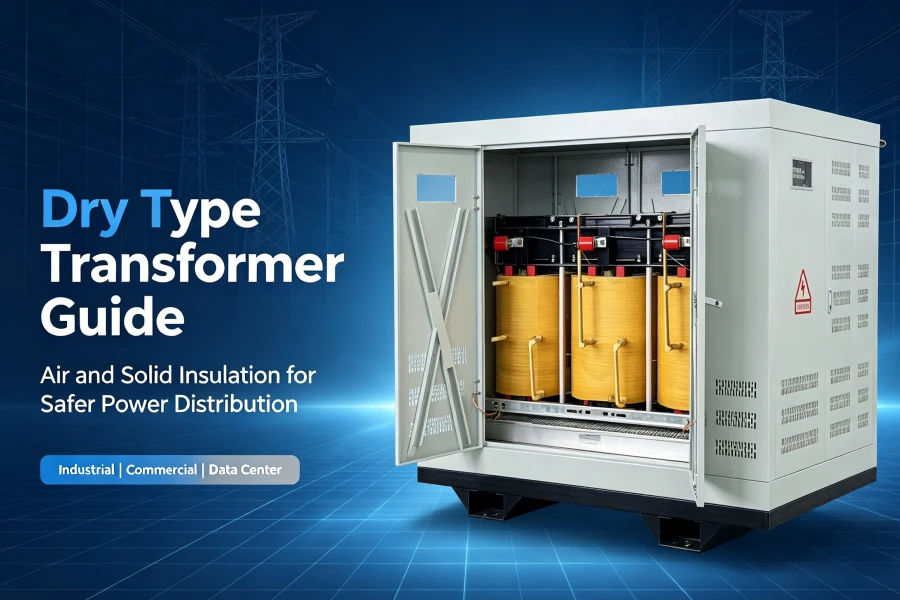
A dry type transformer is an electrical transformer that uses air and solid insulation instead of transformer oil for cooling and insulation. It is widely used in industrial facilities, commercial buildings, data centers, automation systems and electrical equipment. What Is a Dry Type Transformer? A dry type transformer transfers electrical energy between circuits through electromagnetic […]
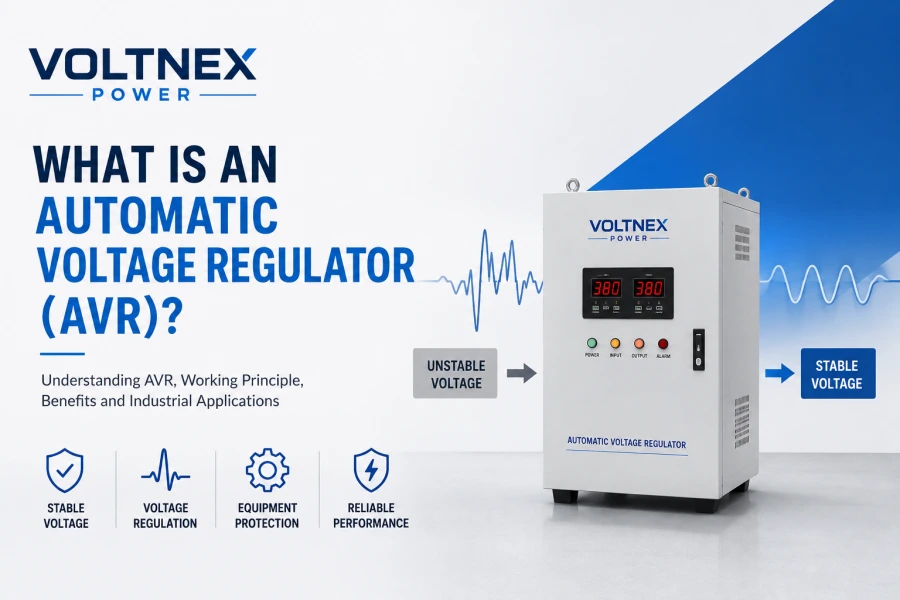
Automatic Voltage Regulator (AVR) is an electrical device designed to automatically maintain a stable output voltage when the input voltage fluctuates. It is widely used to protect industrial equipment, motors, CNC machines, automation systems and other electrical loads from undervoltage and overvoltage conditions. Voltage instability is a common problem in industrial power systems. Changes in […]
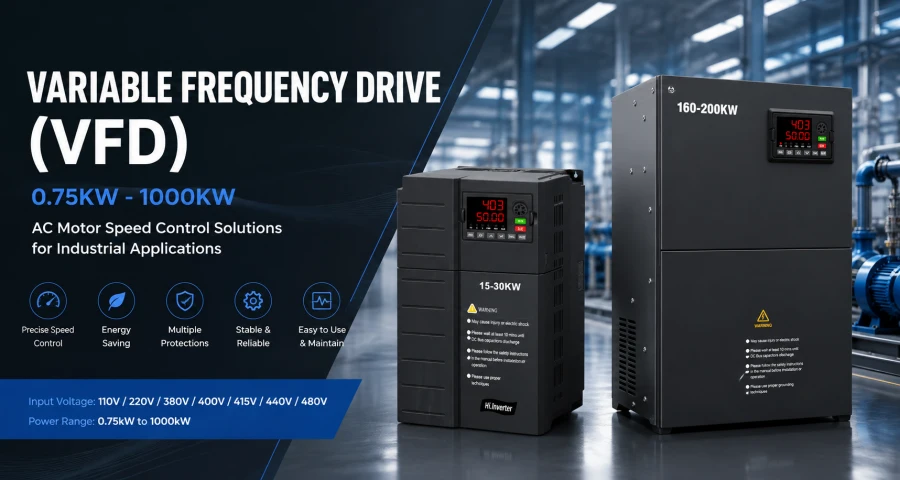
A Variable Frequency Drive (VFD) is an electronic motor control device that regulates the speed, torque, acceleration, and operating frequency of an AC motor. By controlling the frequency and voltage supplied to the motor, a VFD allows industrial equipment to operate at the speed required by the process instead of running continuously at a fixed […]
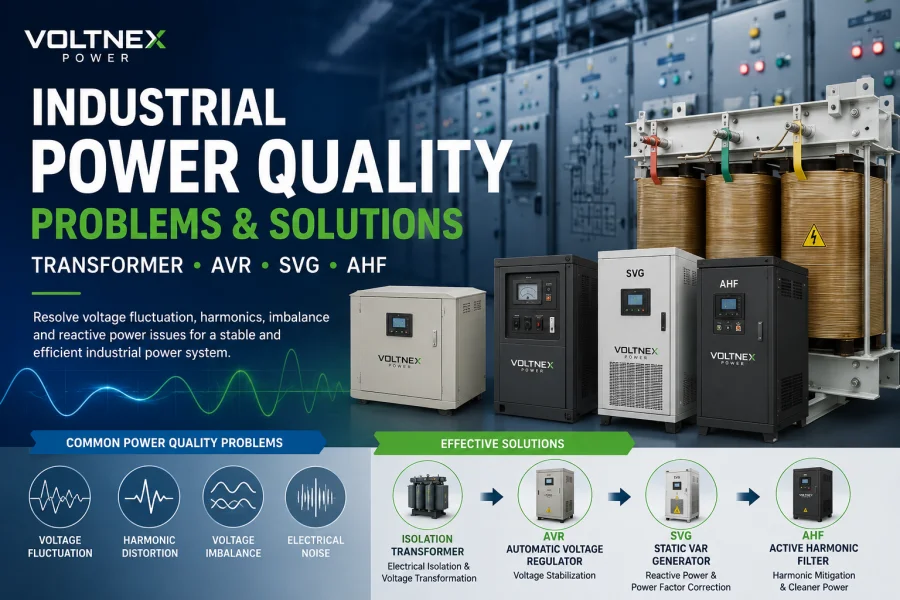
Industrial electrical systems require stable, reliable and high-quality power to keep motors, VFDs, transformers, automation equipment and production lines operating efficiently. However, many factories experience power quality problems such as voltage fluctuation, harmonic distortion, voltage imbalance, low power factor, reactive power and electrical noise. These problems can affect equipment performance, increase electrical losses, cause overheating […]
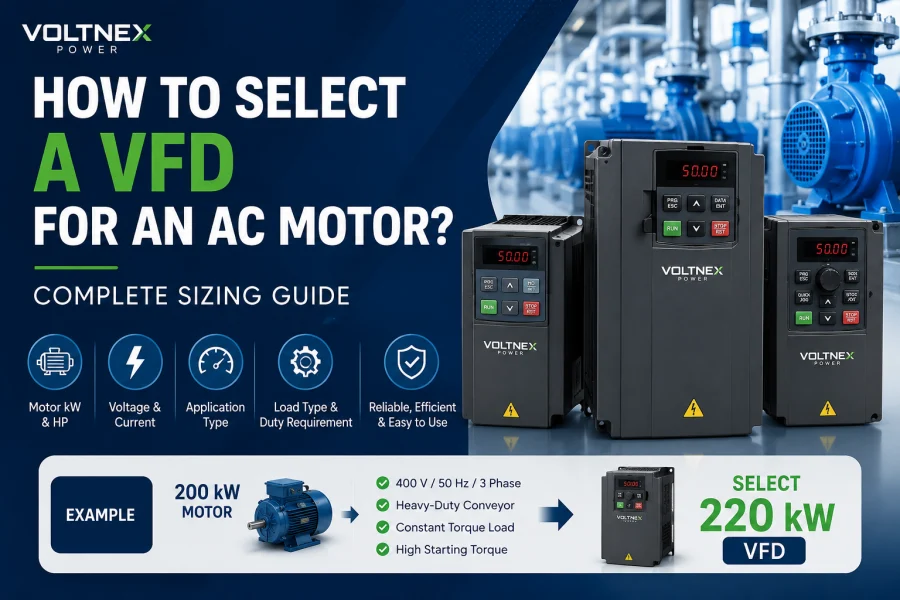
Choosing the correct Variable Frequency Drive (VFD) for an AC motor is essential for reliable motor control, stable operation, energy efficiency, and long equipment life. A properly selected VFD can control motor speed, provide smooth starting and stopping, reduce mechanical stress, and protect the motor against common electrical faults. However, selecting a VFD is not […]
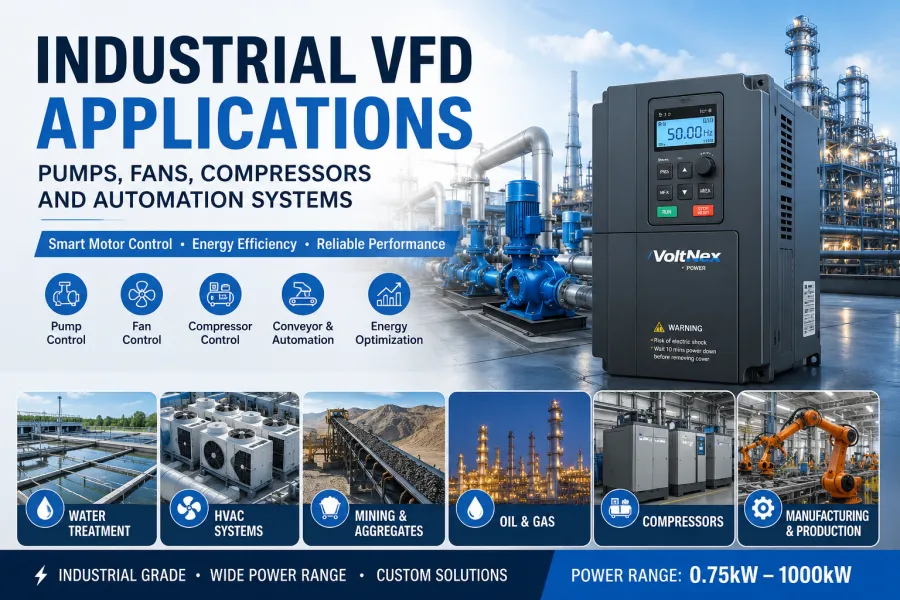
Industrial motors are used throughout modern factories, infrastructure projects, processing plants, HVAC systems, water treatment facilities, mining operations, and production lines. However, many motors do not need to operate at full speed all the time. When process demand changes, continuously running a motor at full speed and controlling the output with valves, dampers, bypass systems, […]